
 See Our Latest Article on HelloNation
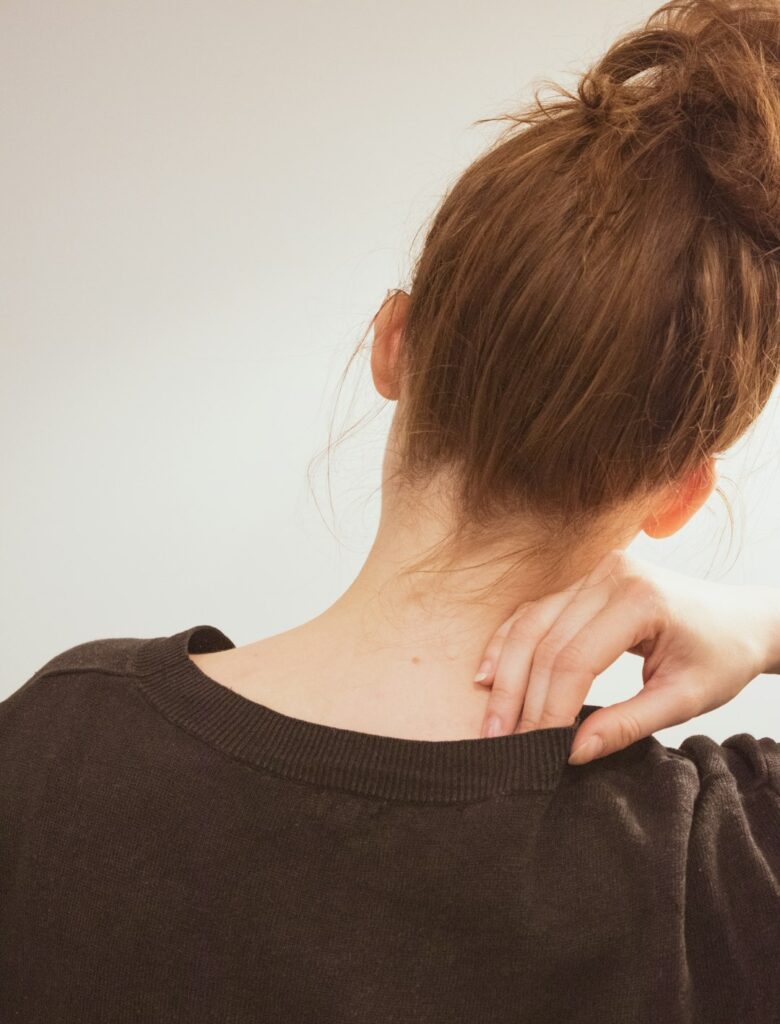
Tension headaches often feel like pressure, tightness, or a band wrapped around the forehead, temples, or back of the head. Neck, shoulder, and upper-back tension can contribute, particularly after long periods of screen use, driving, desk work, stress, or sleeping in an awkward position.
Gentle stretching may reduce muscle tightness and improve comfort for some people. The goal is not to force the neck or “crack” it, but to restore easy, relaxed movement.
Which stretches can help a tension headache?
The most useful movements are usually gentle neck, shoulder, chest, and upper-back stretches. They should create a mild pulling sensation—not sharp pain, tingling, dizziness, or a noticeable increase in the headache.
Try the following sequence in a quiet space:
Chin tucks
Chin tucks can help counter the forward-head position that develops during phone, tablet, and computer use.
- Sit or stand upright with the shoulders relaxed.
- Look straight ahead.
- Glide the chin gently backward, as if making a small double chin.
- Keep the head level rather than looking down.
- Hold for three to five seconds, then relax.
- Repeat five to ten times.
This is a small movement. Pulling the head forcefully backward can increase neck tension rather than reduce it.
Side-of-neck stretch
This targets muscles along the side of the neck that may become tight when the shoulders stay raised or the head remains turned in one direction.
- Sit tall with both feet supported.
- Let the right ear move slowly toward the right shoulder.
- Keep the left shoulder down without pulling it toward the floor.
- Hold for 15 to 20 seconds while breathing normally.
- Return to center and repeat on the other side.
- Complete two repetitions per side.
The head should remain facing forward. Avoid rotating the chin toward the shoulder during this stretch.
Neck rotation
Gentle rotation can be useful after reading, driving, or working at a desk.
- Sit upright and keep the chin slightly drawn back.
- Slowly turn the head to the right until a comfortable limit is reached.
- Pause for a few seconds.
- Return to the center and turn to the left.
- Repeat five times per side.
Do not bounce or push into a stiff endpoint. A reduced range of motion is common when muscles are guarded, and forcing movement can make symptoms worse.
Upper trapezius stretch
The upper trapezius muscles run from the base of the neck toward the shoulders. They often tighten during stress or prolonged sitting.
- Sit on one hand or hold the edge of a chair with that hand.
- Tilt the head away from that side.
- Slightly angle the nose toward the armpit if that produces a comfortable stretch.
- Hold for 15 to 20 seconds.
- Switch sides.
Keep the stretch light. The shoulder should remain down, but it does not need to be pressed forcefully.
Doorway chest stretch
Tight chest muscles can encourage rounded shoulders and a forward-head posture.
- Stand in a doorway with the forearms resting lightly on the frame.
- Place one foot slightly forward.
- Keep the ribs relaxed and gently shift the body forward.
- Stop when a mild stretch is felt across the chest and front of the shoulders.
- Hold for 15 to 20 seconds and repeat twice.
Do not arch the lower back or lean aggressively into the doorway.
Shoulder rolls
Shoulder rolls are useful when the neck feels stiff after computer work or household tasks.
- Lift the shoulders gently toward the ears.
- Move them backward, down, and forward in a slow circle.
- Complete five circles, then reverse direction.
- Finish by allowing the arms to hang loosely.

This movement should feel smooth rather than strenuous.
How should stretching be done during a headache?
Stretching is usually more comfortable when performed slowly, with relaxed breathing and low effort. A short session of five to ten minutes may be enough. It can be repeated later if it feels helpful.
A practical routine is:
1. Take several slow breaths.
2. Perform five chin tucks.
3. Complete gentle neck rotations.
4. Stretch each side of the neck.
5. Add shoulder rolls and a chest stretch.
6. Finish with a brief walk or relaxed movement.
If the headache is already intense, lying down in a quiet, dim room may be more comfortable than exercising. Stretching should support relaxation, not become another physical demand.
Can heat or posture changes improve the effect?
Heat may help relax tight neck and shoulder muscles. A warm shower or comfortably warm pack placed over the shoulders for a short period may be useful. Avoid very hot temperatures and do not fall asleep with a heating device.
Posture changes matter because remaining in one position can keep muscles working continuously. During computer or household tasks:
- Keep the screen near eye level.
- Let the elbows rest close to the body.
- Support the lower back.
- Keep both feet supported.
- Change position every 30 to 60 minutes.
- Look away from close-up screens regularly.
- Avoid holding a phone between the ear and shoulder.
In Patchogue, seasonal changes can also affect daily habits. Cold winter air may lead people to raise their shoulders or spend longer indoors at a desk, while warm, humid summer days may encourage prolonged driving or sedentary indoor time. Regular movement breaks are useful in either season.
Which mistakes can make a tension headache worse?
Stretching too aggressively is a common mistake. The neck is sensitive, and pulling on the head with the hands may irritate muscles or joints.
Other problems include:
- Holding the breath during a stretch
- Bouncing repeatedly
- Stretching through sharp pain
- Continuing after dizziness or visual changes begin
- Performing forceful neck circles
- Expecting one session to correct a recurring problem
- Ignoring sleep, hydration, stress, or screen habits
A stretch should leave the neck feeling the same or somewhat easier. If symptoms repeatedly worsen afterward, stop that movement.
Are tension headaches always caused by tight muscles?
No. Tension headaches can be associated with stress, poor sleep, eye strain, dehydration, caffeine changes, prolonged posture, or general fatigue. Neck and shoulder tightness may be part of the pattern without being the only cause.
A headache that is one-sided and throbbing, or that includes nausea, vomiting, or strong sensitivity to light or sound, may fit migraine more closely than a typical tension headache. Keeping a simple record of timing, symptoms, sleep, meals, screen use, and activities can help identify patterns.
When should a headache be evaluated urgently?
Seek emergency care for a sudden, extremely severe headache, especially if it reaches maximum intensity quickly. Urgent evaluation is also needed for a headache accompanied by weakness, numbness, confusion, fainting, trouble speaking, loss of vision, seizure, high fever, stiff neck, or a recent head injury.
Routine medical evaluation is appropriate when headaches occur several times a week, are becoming more severe, change from an established pattern, interfere with normal activities, or do not improve with reasonable self-care. Frequent use of pain medication can also contribute to rebound headaches, so medication frequency should be discussed with a qualified healthcare provider.
Stretching is best viewed as one part of a broader approach: relaxed movement, regular sleep, balanced meals, adequate fluids, sensible screen habits, and attention to warning signs.
